GDCh.app · Hybrid app platform for the German Chemical Society
How we developed a digital platform for more than 30,000 chemists
GDCh.app · Hybrid app platform for the German Chemical Society
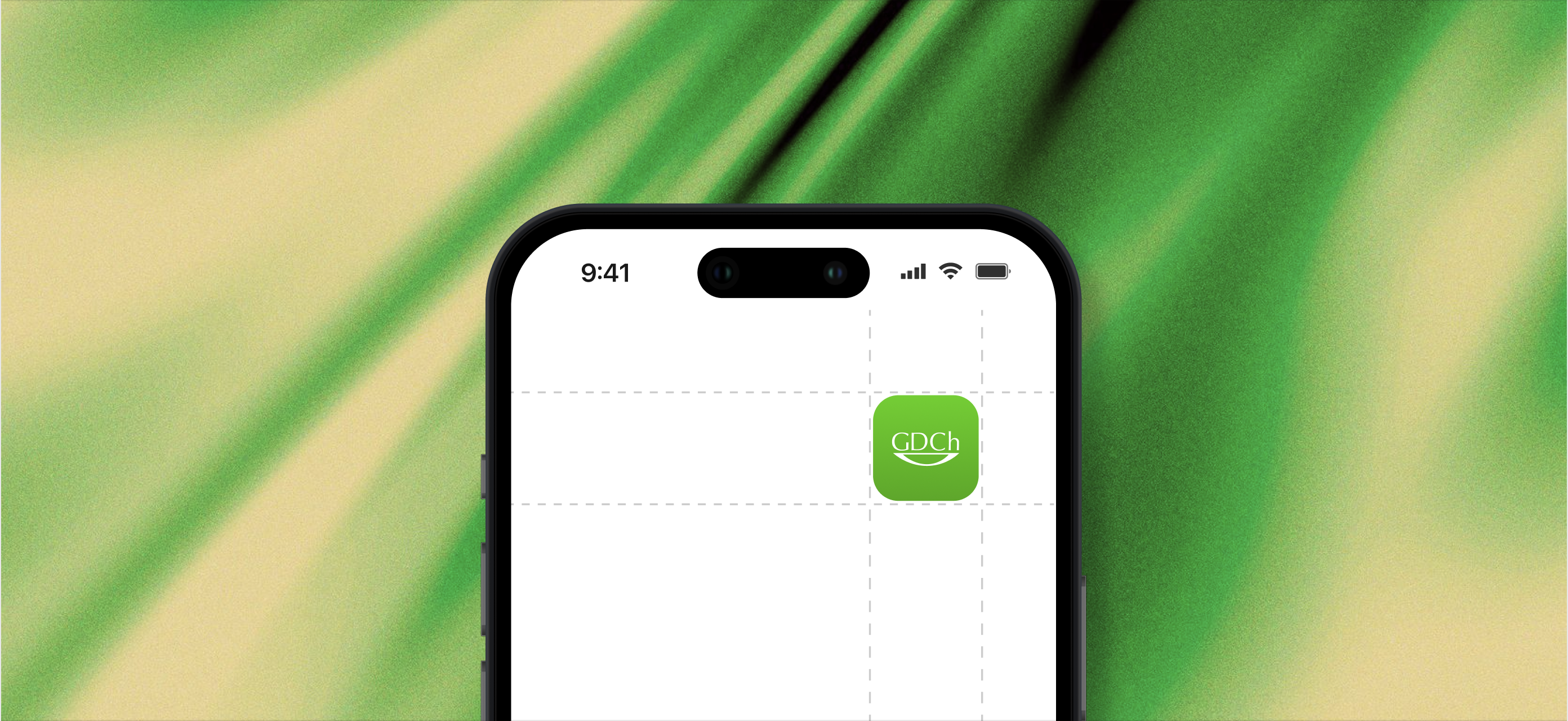
The German Chemical Society needed a digital platform that could serve more than 30,000 members across Germany and internationally. The goal was to create one central app for chemistry news, scientific content, member profiles, events, push notifications and future digital services.
Especial supported GDCh with concept, UX/UI design, front-end development, back-end development and app development. The result is a hybrid app platform for web, iOS and Android, built with React, Next.js, React Native, Expo, GraphQL, Node.js, Hygraph, Vercel and serverless microservices.
German Chemical Society e.V.
7 Months
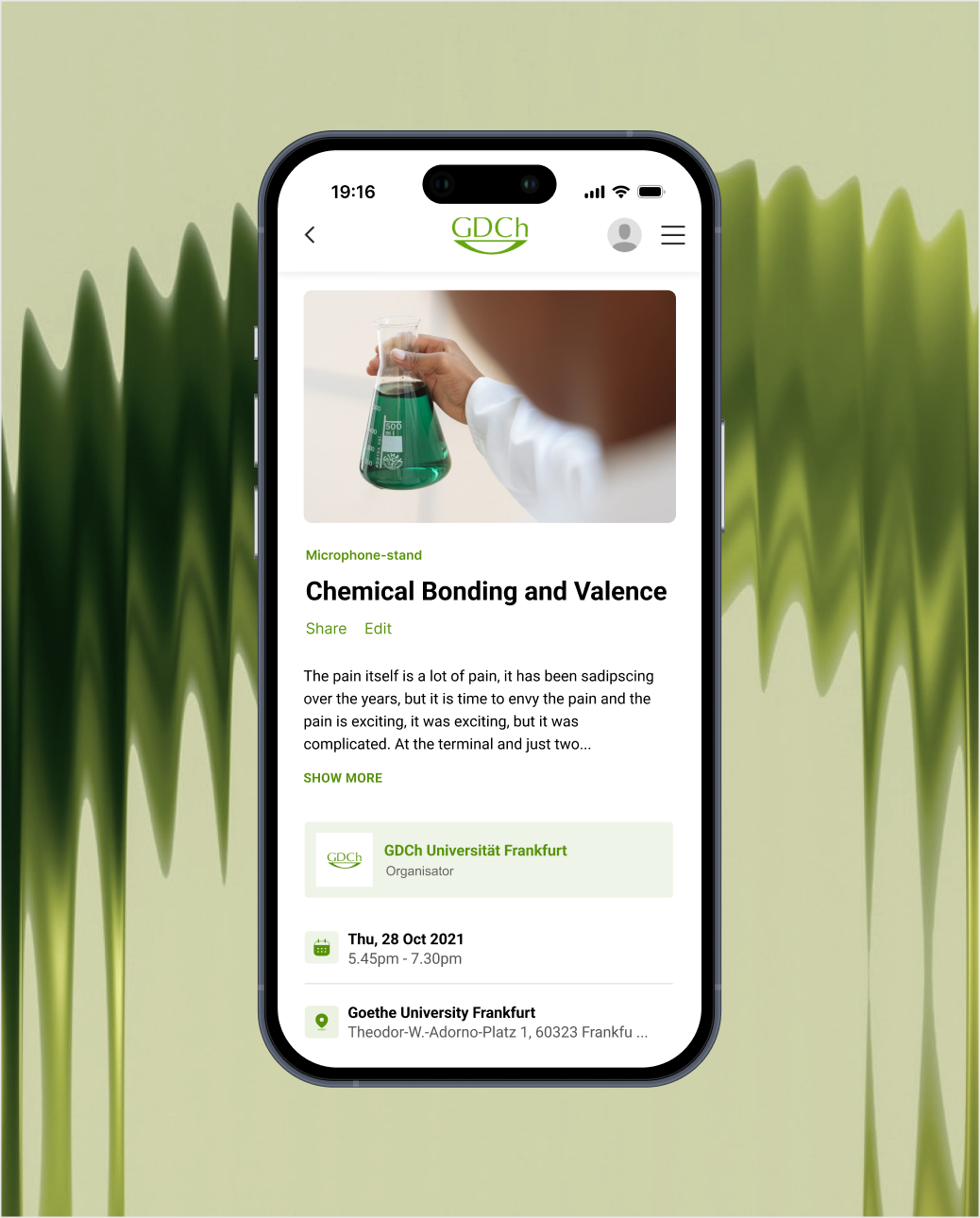
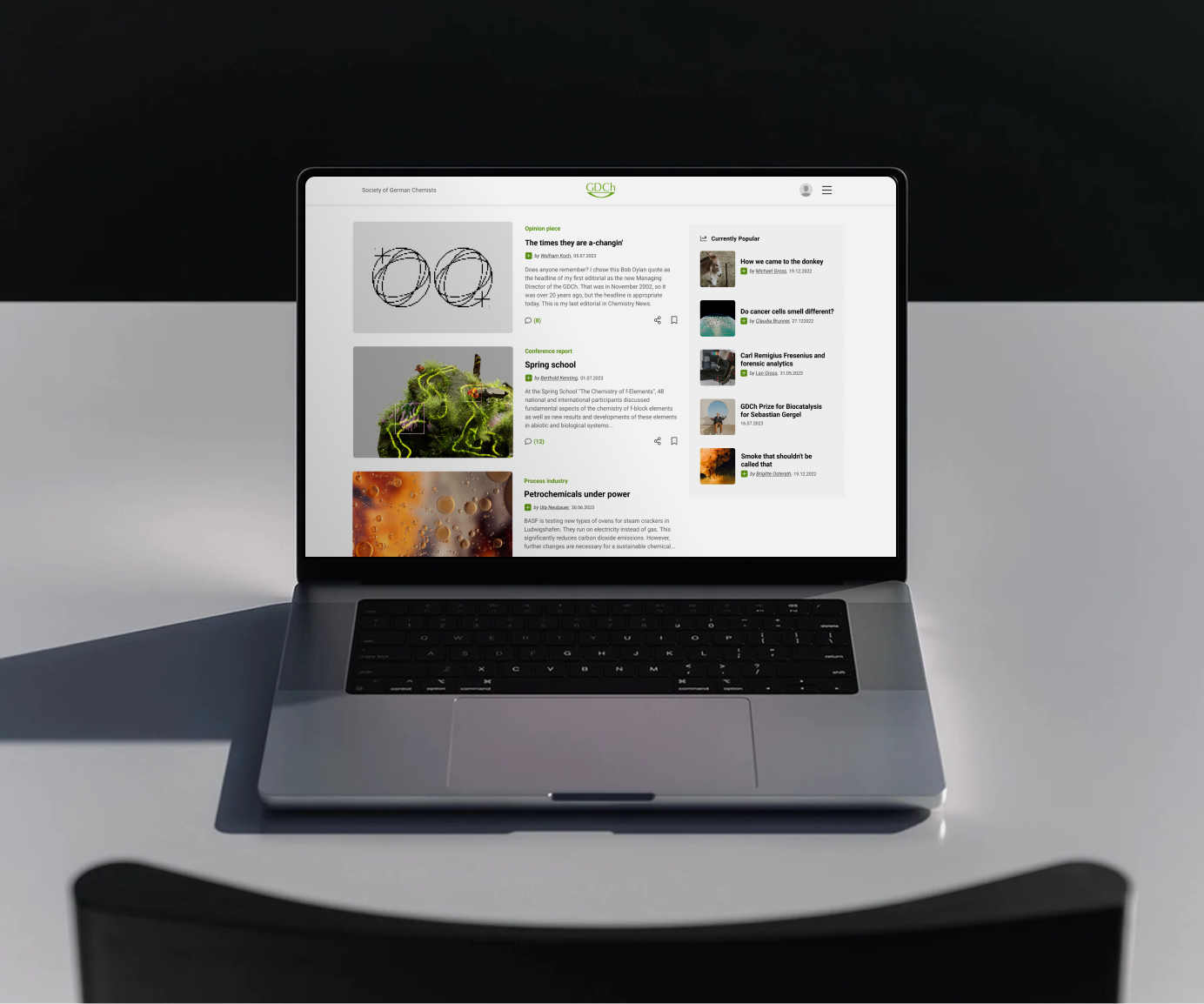
GDCh needed more than a standard mobile app. The platform had to bring together content from different systems, support member profiles, work across web, iOS and Android and remain flexible enough for future digital services.
News, articles, journals, social media content, events and member information had to be made available in one consistent experience. At the same time, the app needed to be easy to use for a broad scientific community, from students and researchers to industry professionals and long-standing GDCh members.
We started with a structured concept and UX phase to align all stakeholders around the final feature set. The goal was to reduce project risk early, clarify the most important user journeys and create a shared understanding of how the app should work before development started.
Together with GDCh, we developed wireframes, reviewed the data structure and created a clickable prototype. This helped the team test ideas quickly, make final conceptual decisions and move into design and development with a clear foundation.
+
1
2
2
3
4
5
6
7
8
9
0
1
2
0
1
2
3
4
5
6
7
8
9
0
1
2
K
+
0
1
2
3
4
5
6
7
8
9
0
1
1
0
1
2
3
4
5
6
7
8
9
0
1
1
0
1
2
3
4
5
6
7
8
9
0
1
1
0
1
2
3
4
5
6
7
8
9
0
1
1
After the concept phase, we translated GDCh’s corporate design into a more modern digital interface. The challenge was to create an app that felt credible and professional, while still being easy to use across different content types, screen sizes and usage contexts.
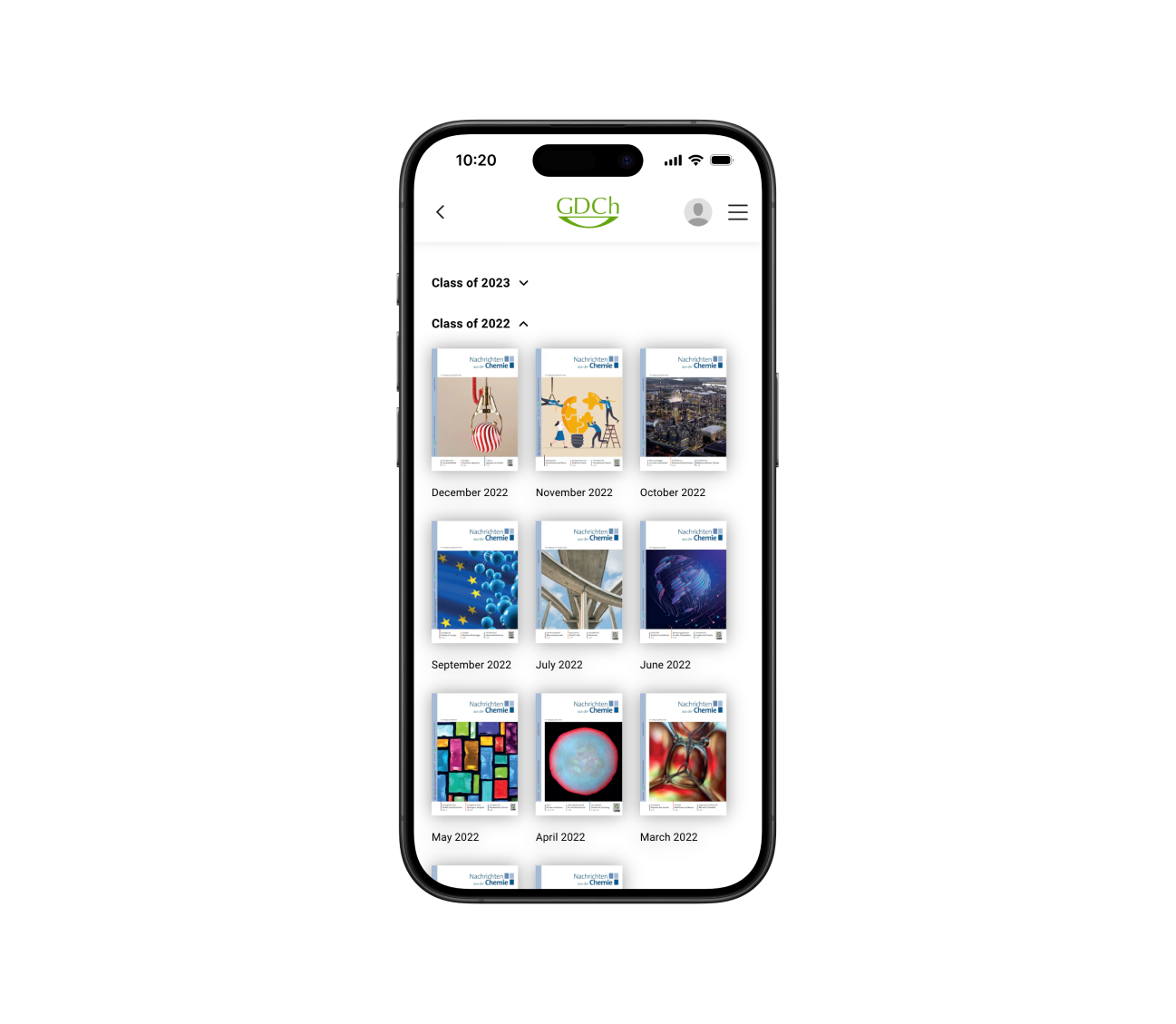
The design had to support reading, browsing, searching, profile interaction and notifications. We focused on clear typography, accessible layouts and a calm visual system that makes scientific content easier to consume. Features such as adjustable font sizes help users adapt the reading experience to their own needs.
The result is a consistent interface for web, iOS and Android that works for mobile users, tablet users and desktop users without feeling like three separate products.
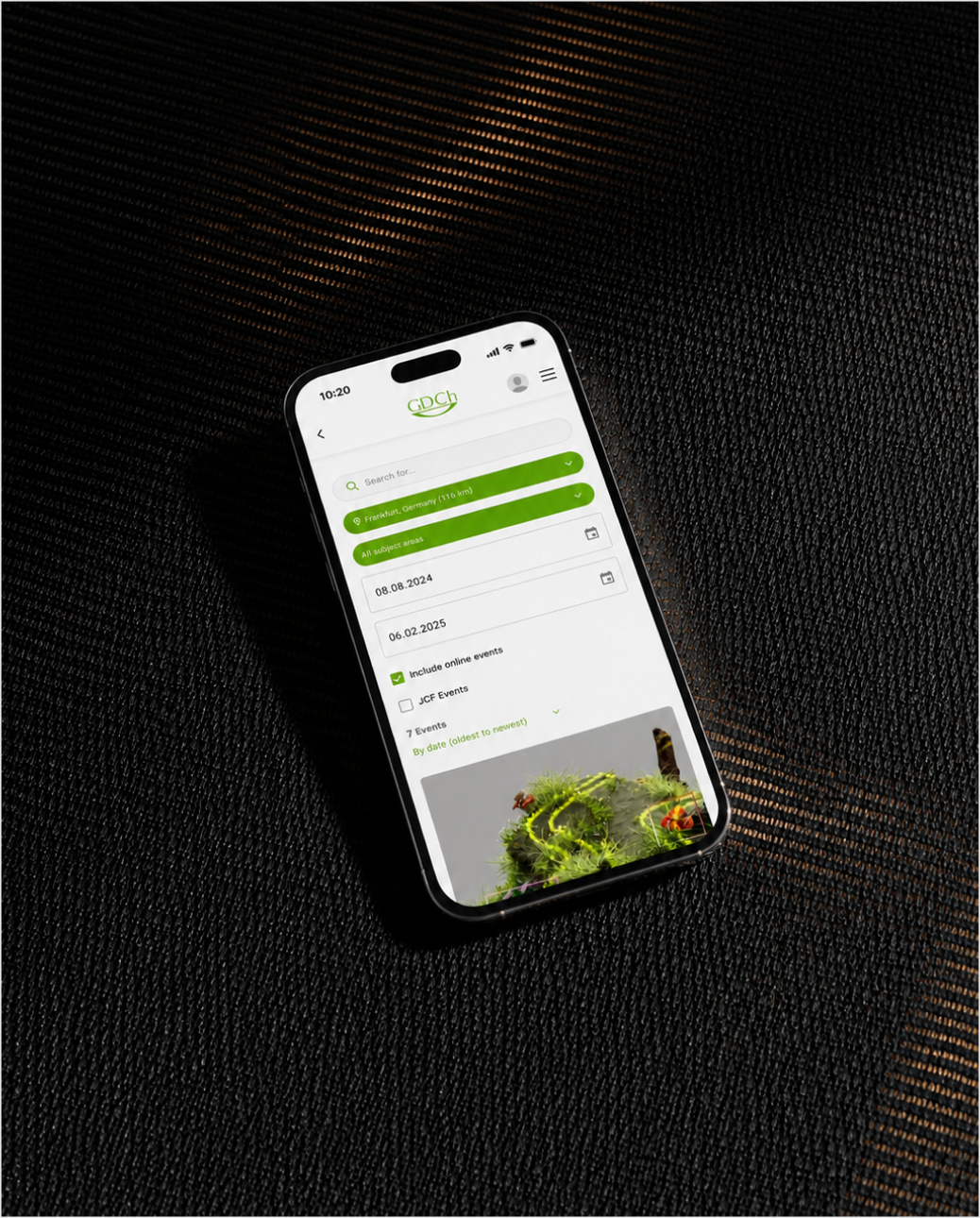
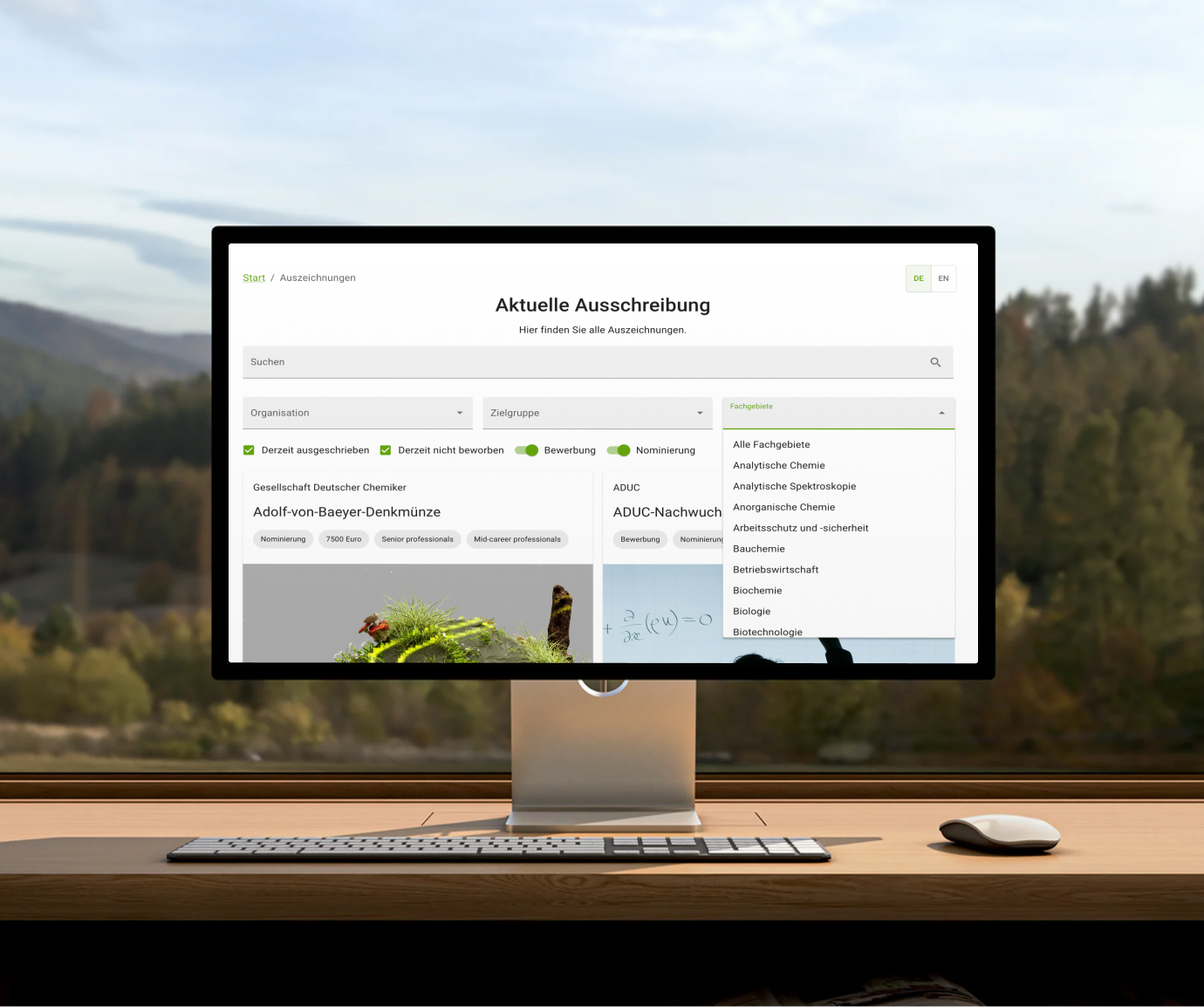
Usually, web apps and mobile apps require separate technology stacks and separate development effort. For GDCh, we used a modern cross-platform setup so the same product logic could support web, iOS and Android more efficiently.
React, Next.js, React Native and Expo allowed us to build a shared platform experience while still respecting the differences between browser, mobile app and device-specific interactions. This reduced development effort and lowered future maintenance complexity.
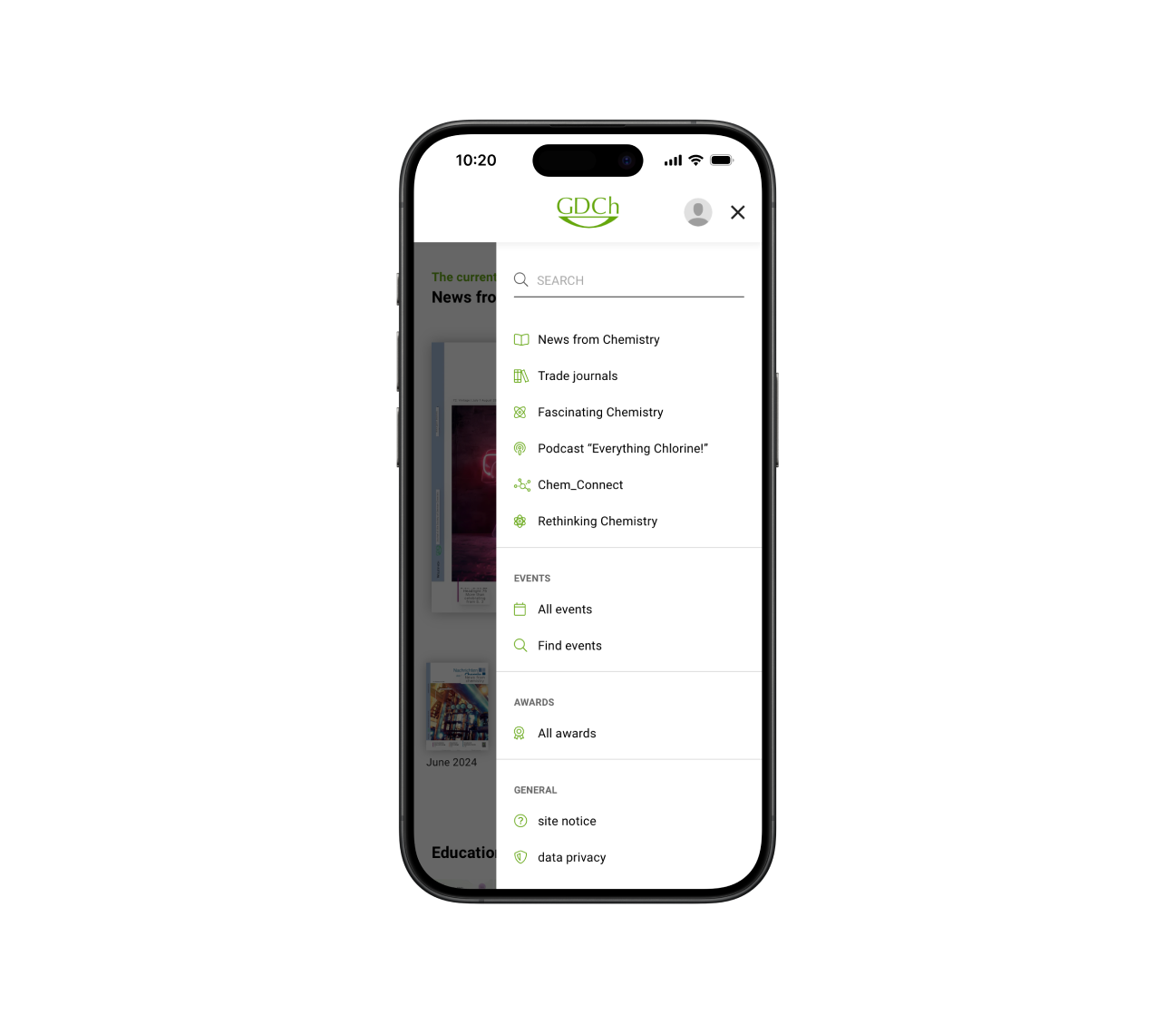
The front-end was built to handle content from different sources and systems. This was important because the app needed to display articles, journals, member content, social posts, images, videos, events and other information with different structures and update rhythms.
With an API-based setup and modern front-end architecture, the platform can integrate content from multiple systems without tying the product to one single CMS or content source.
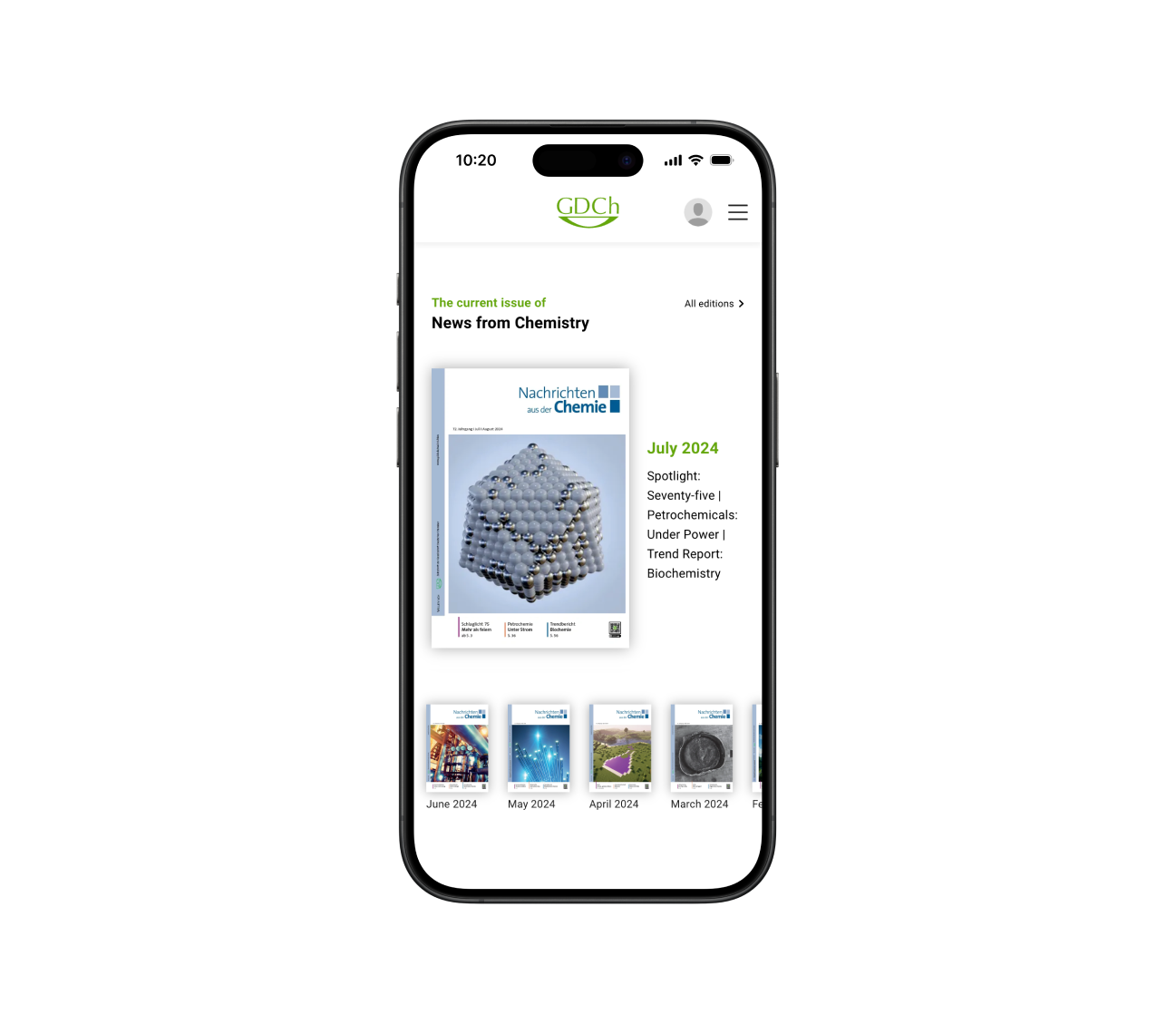
The app needed to perform well across mobile and desktop devices, because members may use it in very different contexts. Fast loading, responsive layouts and efficient content delivery were therefore important parts of the front-end implementation.
We built the platform with performance in mind, including modern rendering patterns, optimized content delivery and social sharing support for articles and other content.
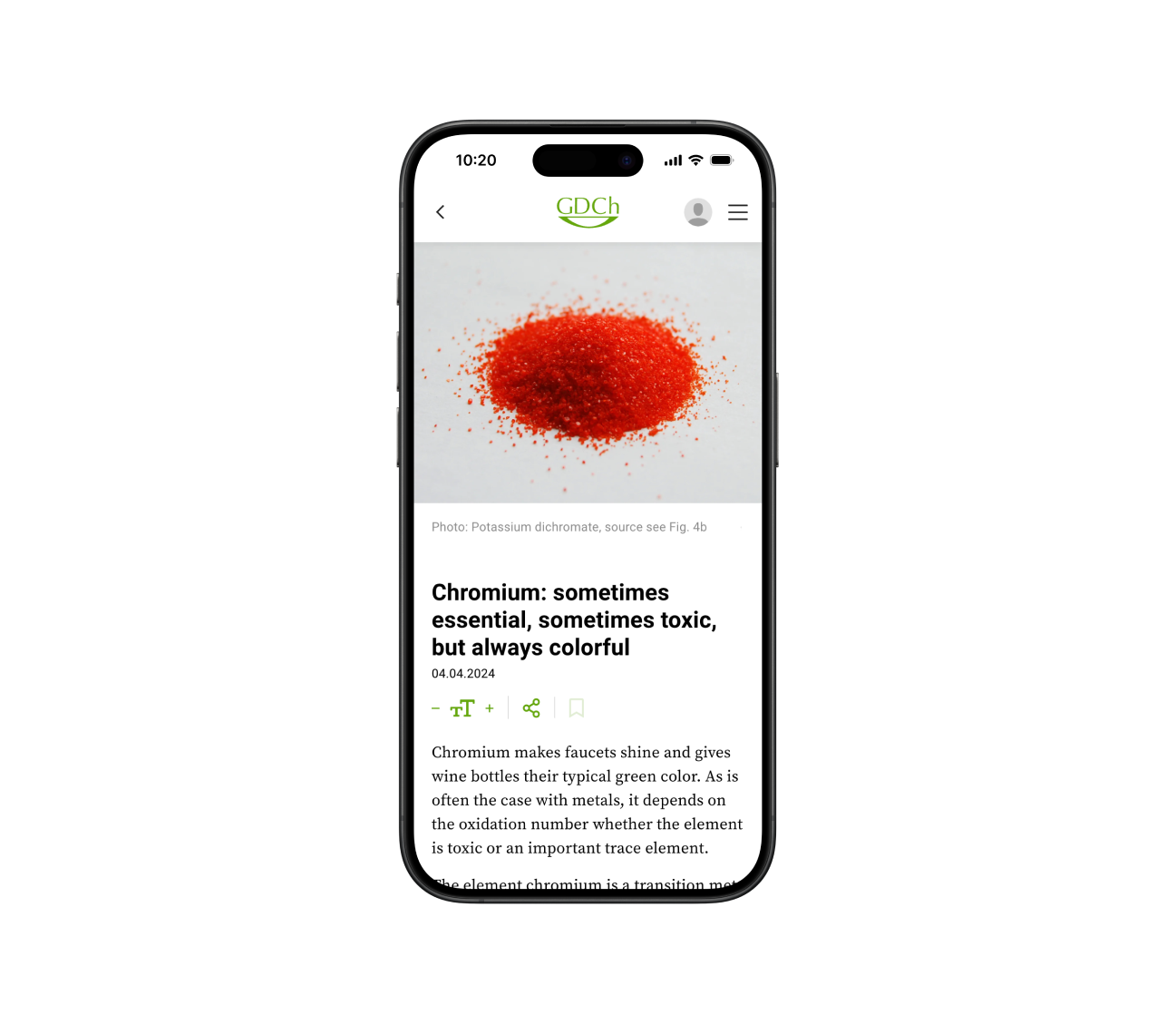
The front-end is deployed on modern cloud infrastructure, which reduces hosting complexity and keeps maintenance effort low. This helps GDCh operate the platform without the overhead of traditional hosting and maintenance setups.
We developed a distributed back-end architecture with seven microservices. These services automatically update and process data for members, articles, images, videos, login, push notifications, authors and additional content areas.
The architecture is based on GraphQL, Node.js, Hygraph, Vercel and serverless functions. This makes the system scalable and easier to operate, because services can run independently and support different parts of the app without turning the whole platform into one large monolithic application.
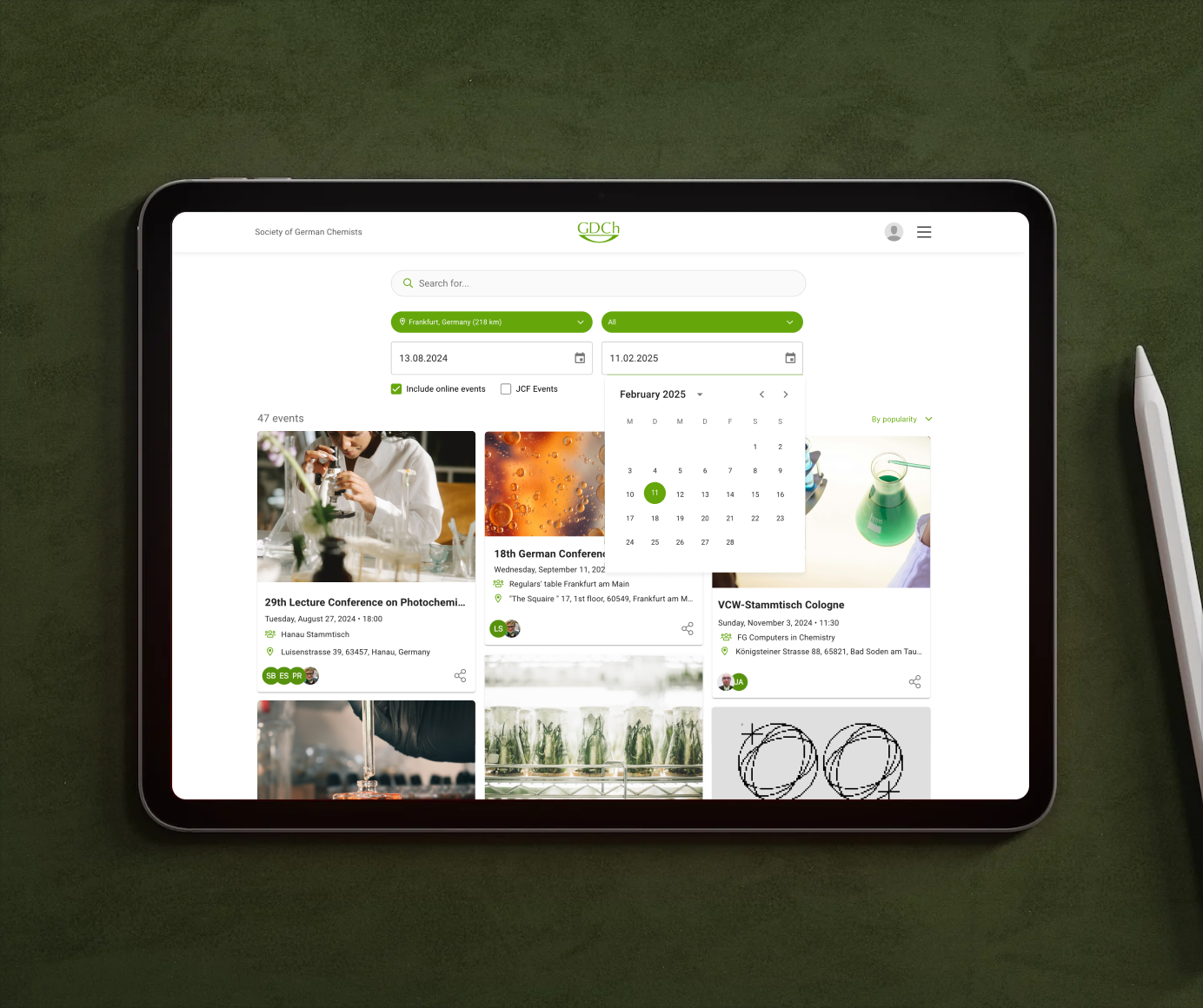
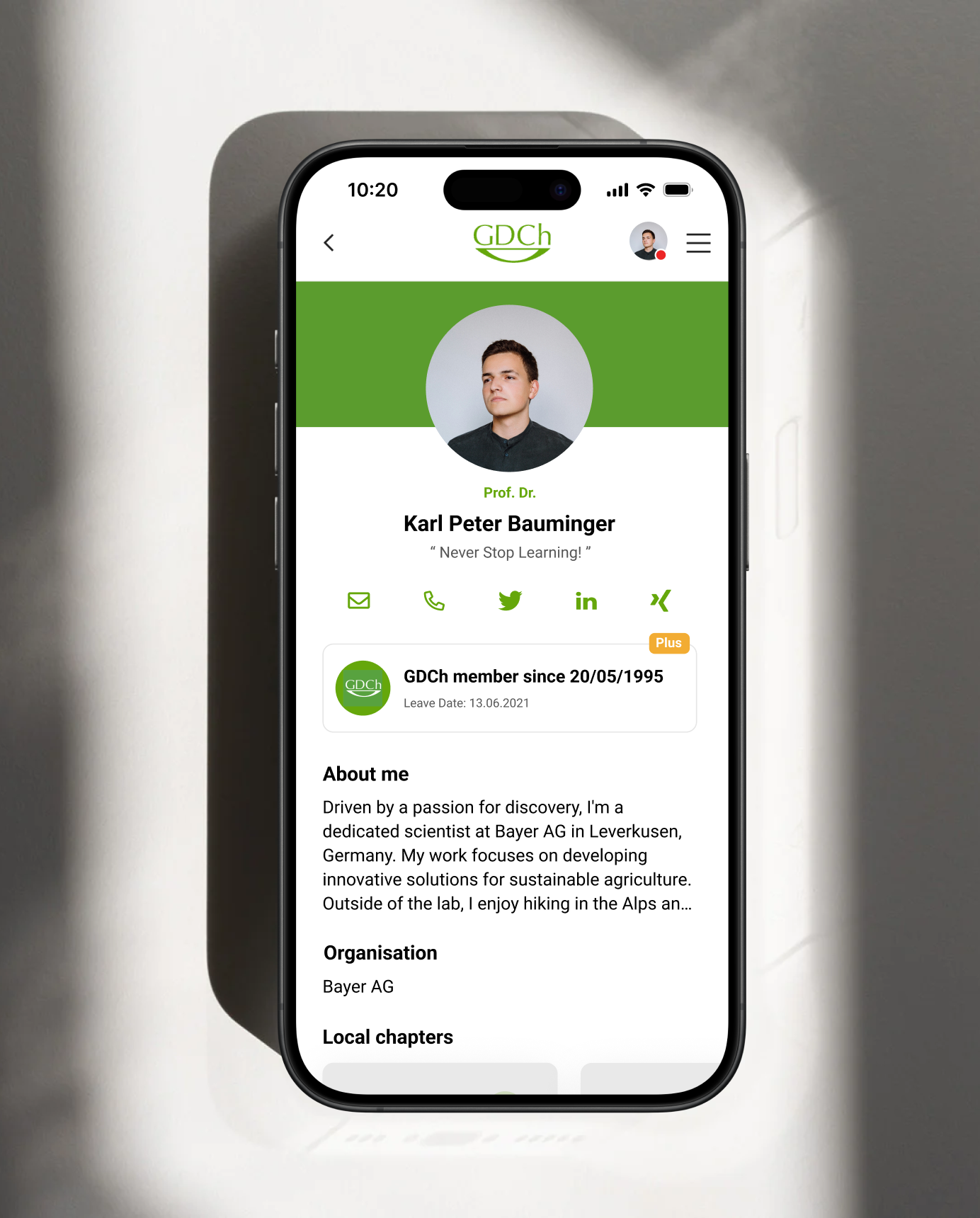
The GDCh.app gave the German Chemical Society a modern digital platform for content, community and future member services. Instead of building a simple news app, the project created a flexible foundation that works across web, iOS and Android.
The cloud-based architecture keeps maintenance effort low and allows the platform to be extended with additional services in the future. New content areas, member features, events, e-learning or career-related services can be added without changing the basic direction of the system.
The project shows how a professional association can turn content, community and digital services into one connected app experience.
+
1
2
2
3
4
5
6
7
8
9
0
1
2
0
1
2
3
4
5
6
7
8
9
0
1
2
K
+
0
1
2
3
4
5
6
7
8
9
0
1
1
0
1
2
3
4
5
6
7
8
9
0
1
1
0
1
2
3
4
5
6
7
8
9
0
1
1
0
1
2
3
4
5
6
7
8
9
0
1
1


NEW
NEW